
WHAT‘S HAPPENING
News & Events
South Australia’s Jasmin Watkins announced for Bus Stop Films 2026 Inclusive Producer Attachment Program
20 July 2026
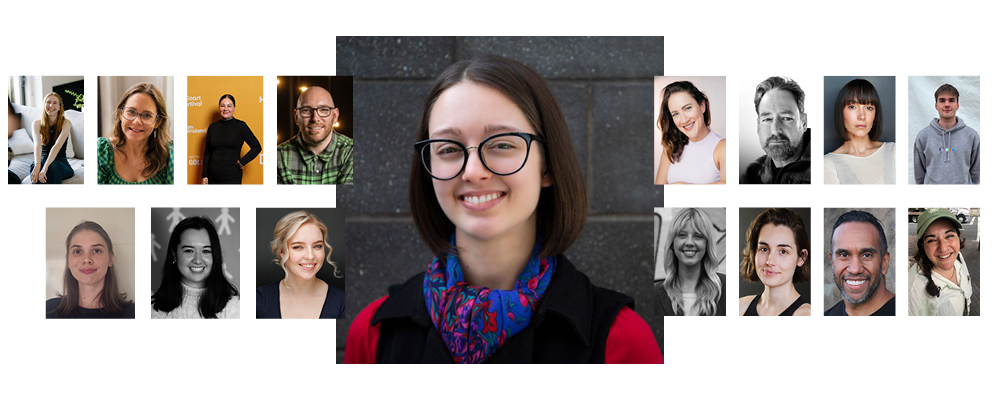
Bus Stop Films has announced the successful selection of 16 producer attachments and the nine producers and projects they will work with for its 2026 Inclusive Producer Attachment Program (IPA), supported by the SAFC.
The selection follows a record 180 applications from across Australia, with 78 candidates progressing to interview.
Among the 16 successful applicants is South Australian filmmaker Jasmin Watkins. Jasmin has worked in the production and unit departments on SA productions including Arterial Films’ Bloom, Ursula Dabrowski’s Ruby Ruby and ABC series Austin S3. She was a researcher for Teenage Boss: Next Level and Junior Post Producer for Aussie Snake Wranglers through Breakout Productions’ Hands on TV training initiative.
A co-founder of Chronosonder Productions, Jasmin produced a season of Channel 44’s Couch 44 as well as several short films including Beat (Best Film, 2023 Fleurieu Film Festival) and Lyrebird (Best Drama, 2022 Paris Play Film Festival). She also wrote and directed the award-winning queer short Aced It! with support from Carclew.
The 2026 cohort producer attachments will work alongside Bus Stop’s COO/Head of Screen Dianna La Grassa and the nine selected producers, six of whom are IPA alumni, representing a diverse mix of gender, cultural backgrounds and the Deaf/Disabled/Neurodiverse (DDN) community, to bring to life a slate of 21 inclusively produced short films across all eight states.
The 2026 IPA cohort represents outstanding diversity representation, with 75% of successful applicants being female. Significantly, 44% of the cohort identify as LGBTQI+, 25% are from the Deaf/Disabled/Neurodiverse community, 13% identify as Aboriginal and/or Torres Strait Islander, and 6% are from a Culturally and Linguistically Diverse (CALD) backgrounds.
Producer Dianna La Grassa said: “I’m genuinely excited to get to know this year’s cohort of IPAs and producers and see what new ideas and skills they bring to our 2026 film collection. What keeps surprising me is the calibre of emerging producers who put their hand up each year, eager to build their understanding of inclusive filmmaking. 2026 is no different, and I’m thrilled to be working alongside so many talented producers as our IPA strategy continues to unearth talent across the country.”
Bus Stop Films CEO Tracey Corbin-Matchett OAM said: “We’re grateful to all state screen agencies for their continued united demonstration of support for our work and impact. This program will deliver strong career development for all involved and build crucial capacity in our sector for skilled producers with deep knowledge of inclusion. It is more than a token strategy; it reflects our 17 years of supporting employment pathways in the arts and our vital role in the ecosystem of the Australian screen industry.”
The program represents strong industry collaboration, receiving support from the SAFC alongside all other state screen agencies – Screen NSW, Screen Queensland, VicScreen, Screen Tasmania, Screen Canberra, Screen Territory and Screenwest – together with significant additional investment from Bus Stop Films itself.
The 2026 program builds on Bus Stop’s ongoing commitment to give back to the sector by supporting emerging talent and inclusive production practices. This year’s cohort of 25, the largest in the program’s history, reflects the growing appetite among producers nationally to build genuine skills in inclusive filmmaking.
The cohort will gain professional skills development in inclusive filmmaking by attending Bus Stop’s Inclusion in Action workshop and become part of a growing network of producers passionate about inclusive filmmaking. The program equips participants with skills in producing films inclusively, supporting people with disability on productions, and producing and marketing content through a lens of inclusion, diversity and accessibility.
Productions will take place across Bus Stop’s class locations in New South Wales (Sydney, Wollongong, Western Sydney, Blue Mountains and Coffs Harbour), Victoria (Melbourne), Queensland (Brisbane, Gold Coast and Cairns), South Australia (Adelaide), Western Australia (Perth), the Australian Capital Territory (Canberra), the Northern Territory (Darwin) and Tasmania (Hobart and Launceston).
The program reflects Bus Stop Films’ ongoing leadership in creating pathways for diverse talent while building industry capacity for inclusive production practices that benefit the entire screen sector.
For more information visit Bus Stop Films.